
As of this writing, I have been married 6 years, 4 months, and 27 days. Yes, I keep the books on my days of marriage. But who’s counting? 😊
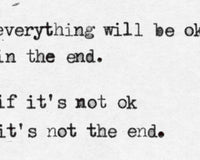
As many of you know, marriage has good days and not-so-good days. My father, Charlie “Tremendous” Jones, put it the way only he could: “You can be miserable miserable, or you can be happy miserable.” The hard days aren’t optional—that part of the ledger is going to have entries no matter who you marry. What you actually get to choose is your posture toward them. I came to mine a little out of practice—single for twenty-five years and well out of the habit of sharing my life with another human being. So, I did what I always do. I read the books. And one piece of counsel stuck with me: don’t judge the marriage by the entry; judge it by the big picture. As long as the good outweighs the bad—as long as you’re north of fifty-one percent—you’re golden.
Think about how merciful that is. I don’t need flawless days on end. I don’t need every column to balance by sundown. I cannot make a covenant decision based on one entry in the ledger. If I ran my marriage the way we run most of our public arguments—one bad entry and out—I’d have been single again by February of 2020.

And that got me thinking about a far bigger ledger—the one we keep on each other.
Many of you who follow along here share a spiritual grounding, so some of you may have caught the news out of a large denominational gathering recently. After much debate over doctrine, one of its leaders chided the members for caring too much about doctrinal questions—as if conviction and mission sat on opposite sides of a ledger. Tend to your beliefs, the argument went, and you rob the mission. Tend to the mission, and you must set the beliefs aside.
That phrase stopped me cold: opposite sides of the ledger. Because that is the whole trick, isn’t it? The moment you frame two good things as competing columns, you’ve already settled the argument before anyone has made it. You’ve told one group that their concern is the cost, the debit that the rest of us have to carry. You don’t have to answer them anymore. You just subtract them.
I call it black-and-white thinking, and once you see it, you cannot un-see it. It runs through nearly every division we have, and it always works the same way: take one true thing and another true thing, drag them to opposite poles as though no shade could possibly exist between them, and force an either/or choice that was never real. Let me show it to you in two places that couldn't look more different—a church convention and a stock exchange—and watch how it’s the same move in both.
Start where we started. Doctrine or mission. But these have never been opposites. A church that believes nothing in particular has nothing in particular to offer anyone. The early believers didn’t grow in spite of their convictions—people walked into the arena over those convictions, and that conviction is precisely what drew others in. The belief was the mission. To pit one against the other is to misunderstand both.
Now travel about as far from a church convention as you can get—to the stock exchange—and you’ll find the identical move waiting. We are told it’s the wealthy or the rest of us—every dollar at the top pulled straight from your pocket. But wealth is not a fixed pie someone grabbed a bigger slice of. It gets created. Someone took the risk, signed the loan personally, made payroll before they ever paid themselves, and lay awake wondering if the whole thing would collapse on Friday. No risk-taker, no enterprise, no paycheck.
Consider the headline as I write this: just days ago, Elon Musk became the world’s first trillionaire when his rocket company went public. The reflex split instantly into two columns—vilify the obscene oligarch, or canonize the heroic genius. Pick one. But watch what the trap makes you miss. The very same offering that crossed that line also minted thousands of brand-new millionaires and several new billionaires—his own employees, the people holding stock who rode his coattails into real wealth on the very same day. Here is the truth, whether you admire the man or not: he did the work, and he built a thing almost none of us could have built. And here is the love, plain on the books: he didn’t pull the ladder up behind him—others rose with him. Both columns, signed and visible. You don’t have to canonize the man to enter the credit honestly. The wealth was created, and the creating lifted others. That isn’t extraction. That’s a pie made larger.

Now, hear me clearly. Not everything is a false choice. Some things genuinely are either/or—truth and error, right and wrong, honesty and fraud. I am not preaching that everyone is a little bit right and nothing is worth standing for. The sin isn’t conviction. The sin is taking what is honestly both/and, and fraudulently forcing it into either/or to silence the side you’d rather not hear.
So, what does a leader do to keep a well-dressed mind? Simple: stop wearing black and white, and start wearing truth and love. F. Scott Fitzgerald put it about as well as it can be put: “The test of a first-rate intelligence is the ability to hold two opposed ideas in the mind at the same time, and still retain the ability to function.”

That is the whole difference. The black-and-white mind is a one-color mind—it can hold only a single column. The first-rate mind wears both. And it is worth noticing—gently—that splitting the whole world into two warring camps and being unable to hold both actually has a clinical name: dichotomous thinking, an all-or-nothing distortion, and therapists spend whole sessions helping people un-learn it. We send the individual to get free of this pattern, then reward it on the public stage and call it conviction.
So here is what we should strive for. Give credit where credit is due. Keep honest books. When someone raises a concern that belongs in the credit column, enter it there—even when their concern is inconvenient to you, even when you’d find the day easier if you could just subtract them. Stop entering people as debits. Record every real contribution where it actually belongs, and then do the hard, unglamorous work of making the books balance. That work—the both/and—is the very labor the trap was drawn to help us avoid.
And here is the key—the one thing that finally gets you out of the trap. You do not escape the either/or by picking a cleverer column. You escape it by refusing the columns altogether and landing squarely on both truth and love. Whatever side of the ledger you find yourself on, whatever entry you’re about to make, it must carry both signatures, or it is a fraudulent entry. Truth without love is a clanging cymbal—correct, and cruel, and licensed by its own rightness to wound. Love without truth goes soft on what is real and calls the cowardice kindness. Paul wouldn’t let us pick a column either: speak the truth, he said, in love. Both, or the books don’t balance—no matter how right you are.
And keep honest books in one more way, because this is where I have to discipline myself most. My pastor says it plainly: we are fruit inspectors, but only God can judge the heart. In the ledger of life, I can only enter what I can actually see—the fruit, the conduct, the pattern. I do not get to record a motive because I cannot see one. Before you banish someone to the debit column, remember: all you ever see is the fruit. You do not know what lies beneath—and the One who does is the only one entitled to make that entry. So inspect the fruit. Leave the heart to Him.
We don’t audit a marriage on one bad day. We don’t damn a covenant over a single entry. Fifty-one percent and you’re golden—because honest accounting reads the whole ledger, not one frozen debit. So, the next time someone hands you a ledger with the columns already filled in and tells you to pick a side, do the brave thing. Refuse the rigged books. Audit who’s holding the pen. Give people the credit they’re owed before you ever enter them as a cost.
The Apostle Paul gave us the wardrobe instruction two thousand years ago: be transformed by the renewing of your mind. That is the whole project—trading the cheap black-and-white for the rich weave of truth and love. After all, we’d all like our minds on the best-dressed list.
And when you sit down to do your own books, dip your pen deep in the inkwell of grace and mercy.